

Palestinian Arabs "have sought a future of liberation from the river to the sea for all peoples," claimed Noura Erakat, a Rutgers University associate professor of Africana studies during a late February webinar. Although she... 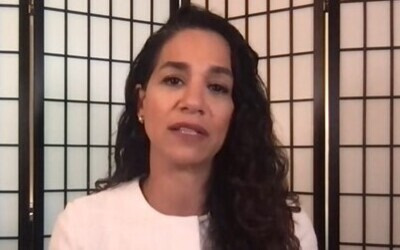
"There's not enough at this moment to support the charge of genocide" brought against Israel, said George Washington University international affairs and political science professor Michael N. Barnett during a January 18 webinar... 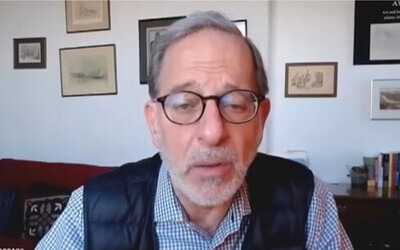
"There's an Israeli people now" and "Palestinians have to figure out how we're going to live with them," stated Columbia University Edward Said Professor of Modern Arab Studies Rashid Khalidi during a December 14 Jadaliyya...
Charging that "the commanding heights of the American economy and American institutions are controlled by people who are so blindly hostile to Palestinian rights," Edward Said Professor of Modern Arab Studies at Columbia... 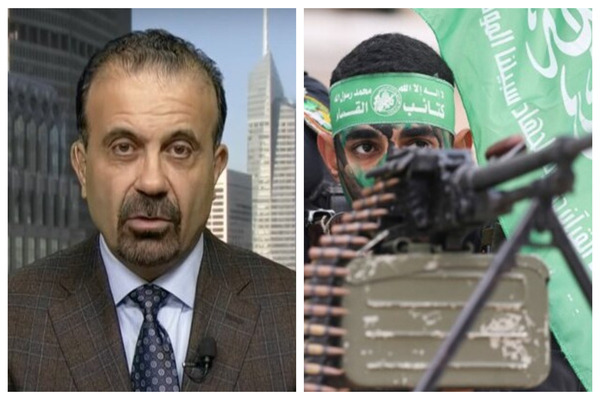
The "Oct. 7 Hamas offensive" from Gaza into Israel was part of a "war between the Palestinian resistance" and an "Israeli colonial settler and apartheid regime," declared Joseph Massad in a December 4 webinar. The tenured... 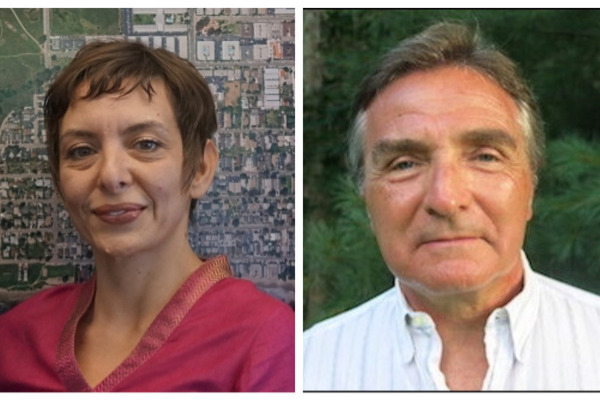
"Every single liberation struggle has taught us that no one is free unless we are all free," gushed University of California-Santa Barbara Associate Professor of History Sherene Seikaly during a November 21 webinar sponsored by... 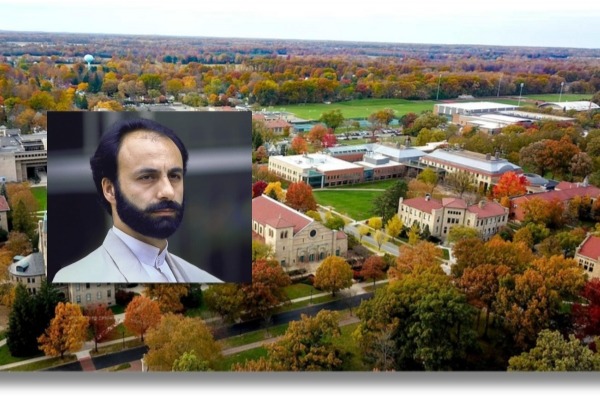
The Ohio-based Oberlin College removed a former Iran regime official and religion professor, Mohammad Jafar Mahallati, from his teaching post after a three-year pressure campaign from Iranian Americans who were outraged over his... 
Israelis need "to behave like normal human beings instead of genocidal psychopaths," proclaimed University of Michigan professor and former Middle East Studies Association president Juan Cole in a November 21 webinar on the "The... Howler of the Month (archive)"MESA is a pillar of the field, and a constant advocate for the best in scholarship and teaching, as well as the broader principles of academic freedom, with respect to both study and pedagogy," Asli Bâl, president of the Middle East Studies Association (MESA) and professor of law at Yale, on MESA's relocation to the Center for Contemporary Arab Studies in Georgetown University's (GU) Walsh School of Foreign Service; MESA press release, February 21, 2024. (link to source) We Couldn't Have Said it Better (archive)"A straight line extended from Harvard and Oxford, Berkeley and the University of Massachusetts directly to a foreign policy bureaucracy that viewed Middle Eastern rulers as rational modernizers, Middle Eastern societies as ready to reconcile with a contrite and philanthropic United States, and the Arab-Israeli conflict as a core dispute which, if resolved, could turn the entire region into Switzerland." Michael Oren, former Israeli ambassador to the U.S., in "Field of Fire: Fifty Years in Middle East Studies (Part II)"; in "Clarity with Michael Oren," April 16, 2024. (link to source) CAMPUS WATCH, a project of the Middle East Forum, reviews and critiques Middle East studies in North America with an aim to improving them. The project mainly addresses five problems: analytical failures, the mixing of politics with scholarship, intolerance of alternative views, apologetics, and the abuse of power over students. Campus Watch fully respects the freedom of speech of those it debates while insisting on its own freedom to comment on their words and deeds. |
Subscribe to Our Mailing List Latest Articles Latest Blog Posts |