Campus Watch

Campus Watch

Quote of the Month Archive

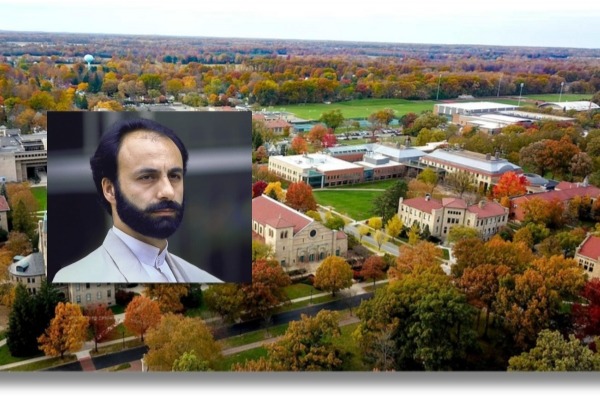
Ebrahim Moosa
"Wahabism is like the Baptists; it's kind of a denomination of sorts that started out in Saudi Arabia."

Ebrahim Moosa, associate professor of Islamic studies at Duke University, commenting on Wahhabi influence in higher education via the funding of Middle East studies at Georgetown and Harvard universities by Saudi Prince Alwaleed bin Talal; as quoted in the Charlotte Observer, February 25, 2010. (link to source)


Rashid Khalidi
"What I've said is that I think for a variety of reasons — strategic, moral, historical — that they should adopt a policy of non-violence, not just not killing civilians. I think that violence doesn't serve them, partly because they're dealing with a people which sees itself as the ultimate victims, and anything they do involving violence reinforces and strengthens that sense of victimhood."

Rashid Khalidi, Edward Said Professor of Modern Arab Studies at Columbia University, on what Palestinians should do to advance their cause, The Brown Daily Herald, February 19, 2010. (link to source)


John Esposito
"I always seem to speak in huge ballrooms that are filled. I wonder if it could be me?"

John Esposito, director of the Prince Alwaleed bin Talal Center for Muslim-Christian Understanding at Georgetown University, speaking about "The Future of Islam," of which he is co-author, at the Carnegie Council for Ethics in International Affairs, New York City, January 27, 2010. (link to source)


Andrew March
"The most common objection to polygamy is on grounds of gender equality, more specifically, female equality....Properly understood, polygamy involves no inherent statement about the essential inferiority of women, and certainly not more than many other existing practices and institutions (including many expressions of the main monotheistic religions) which political liberals regard as tolerable, even reasonable."

Andrew March, assistant professor of political science at Yale, in the abstract of "Is There a Right to Polygamy? Marriage, Equality and Subsidizing Families in Liberal Public Justification," in the Journal of Moral Philosophy, Forthcoming. (link to source)


Joseph Massad
"Benjamin Netanyahu is insistent that no progress will take place in the so-called peace process unless the Palestinians officially recognize Israel's right to be a racist Jewish state."

Joseph Massad, associate professor of modern Arab politics and intellectual history at Columbia University, speaking at the Church of the Holy Trinity in New York City, October 27, 2009. (link to source)


Ingrid Mattson
"I don't understand why the Muslim-American community has to take responsibility for him. The Army has had at least as much time and opportunity to form and shape this person as the Muslim community."

Ingrid Mattson, professor of Islamic Studies and Christian-Muslim Relations and Director at the Macdonald Center for Islamic Studies at Hartford Seminary, on Fort Hood shooter Major Nidal Malik Hasan, New York Times, November 8, 2009. (link to source)


Rashid Khalidi
"Abbas is too feeble to negotiate because the Israelis disdain him.... Hamas is also too weak to carry out its chosen strategy of what it calls 'resistance' --they haven't fired a rocket in almost nine months since the Israeli attack on Gaza ended in January. And so really this is a totally unsatisfactory situation."

Rashid Khalidi, Edward Said Professor of Modern Arab Studies at Columbia University, as quoted in an interview with the Council of Foreign Relations on "The Tragedy of Palestinian Divisions," October 29, 2009. (link to source)


Hamid Dabashi
"They are made invisible...they are nonexistent. One can travel through Palestine and never see Palestinians."

Hamid Dabashi, Hagop Kevorkian Professor of Iranian Studies and Comparative Literature at Columbia University, as quoted in the "Columbia Spectator," October 8, 2009. (link to source)


Lucy K. Pick
"The Danish anti-Islamic cartoons published by Jyllands-Posten on September 30, 2005 are...far from being a bold and innovative defence of Western values...instead the latest manifestation of a long medieval European tradition of seeking out martyrdom by deliberately insulting Islam in general and the Prophet Muhammad in particular."

Lucy K. Pick, director of undergraduate studies and senior lecturer in the history of Christianity in the Divinity School, University of Chicago, in "Orientalism and Religion," published in "Orientalism's Wake: The Ongoing Politics of a Polemic," in Viewpoints, No. 12, September 2009; the Middle East Institute, Washington, D.C.. (link to source)


Juan Cole
"By talking about 'patriots' 'protecting' the individual right to bear arms, Palin skated awfully close to the militia or 'patriot' movement on the right-wing American fringe (and not for the first time). Ahmadinejad is not similarly in favor of all citizens having guns, but he comes out of a popular militia, the Basij, which consists of hundreds of thousands of ordinary citizen patriots, armed and pledged to defend the constitution of the Islamic Republic."

Juan Cole, University of Michigan history professor, equating former Alaska governor and Republican vice-presidential candidate Sarah Palin's support for 2nd amendment rights with contested Iranian president Mahmoud Ahmadinejad's involvement with the oppressive Basij militia, Salon.com, August 3, 2009. (link to source)


John Esposito
"The conflict taking place at present between the Islamic world and the West is not because of doctrinal or civilization differences but because of the adoption of double standards towards the Islamic world. Some groups and lobbies, which have an influence over decision making in the West, support the practice of this erroneous policy."

John Esposito, founding director of the Prince Alwaleed bin Talal Center for Mulsim-Christian Understanding at Georgetown, speaking recently at the World Association of Al-Azhar Graduates in Cairo, as quoted in Asharq Alawsat, July 16, 2009. (link to source)


Muqtedar Khan
"I fear that the Ahmadinejad-Netanyahu duo might audaciously mug us of the hopes for a peaceful and just solution to the Arab-Israeli problem inspired by President Obama."

Muqtedar Khan, director of Islamic studies at the University of Delaware, discussing the repercussions of the uprising in Iran in "Threatened Hopes," published in the Daily Times (Pakistan), June 28, 2009. (link to source)


John Voll
"The parallel would be for a deputy sheriff to require a woman going through security to take off her brassiere right there in the inspection section."

John Voll, professor of Islamic history and associate director of the Prince Alwaleed bin Talal Center for Muslim-Christian Understanding at Georgetown University, as quoted in the June 5, 2009 Baltimore Sun asserting that Muslim women passing through security checkpoints at court houses should not be required to remove their hijab or niqab. (link to source)


Joseph Massad
"As Palestinians are murdered and injured in the thousands, world powers are cheering on. This is hardly a new development. It happens often in the context of other populations being murdered by allies of the US and Europe, and it even happened during World War II as the Nazi genocide was proceeding."

Joseph Massad, Columbia University associate professor of modern Arab politics and intellectual history, in "The Gaza Ghetto Uprising," which appeared in The Electronic Intifada, January 4, 2009. A photo of Nazi troops rounding up Polish Jews during the Warsaw Ghetto Uprising of May, 1943, accompanied the article. (link to source)


Sondra Hale
"This is the role of the Center for Near Eastern Studies – to bring us programs of this sort."

Sondra Hale, professor of anthropology and women's studies at UCLA, responding to a February 19, 2009 student op-ed in the Daily Bruin on a UCLA symposium on "Human Rights and Gaza" that, in the words of Campus Watch contributor Eric Golub, "instructed attendees on how best to spread anti-Zionism, anti-Semitism, and anti-Americanism." (link to source)


Gabriel Piterberg
"For political and military elites in Israel, and the War on Terror constituency in the US, the killing of Arabs and Muslims no longer requires any weeping or soul-searching. It's just what freedom-loving people do."

Gabriel Piterberg, professor of history at UCLA, writing about Gaza in the January 29, 2009 issue of the London Review of Books. (link to source)


Joshua Schreier
"This class traces the history of the Israel-Palestine conflict from its roots during the late Ottoman period through the current period. Students should keep in mind that this course is NOT designed to present 'an objective' account of a 'two-sided' conflict. The fact that there are supposedly two sides does not obligate us to portray each as equally right and/or equally wrong."

Joshua Schreier, assistant professor of history at Vassar College, in the introduction to the syllabus for History 214, The Roots of the Palestine-Israel Conflict, which Schreier taught during the Fall 2008 semester. (link to source)


Muqtedar Khan
"[G]overnments continue to avoid addressing root causes [of terrorism] such as Palestine and Kashmir. Increasingly abuse of Islam, its values, its history and its symbols is being used as a weapon in the war on terror and this too continues to win more recruits for the extremists."

Muqtedar Khan, director of Islamic studies at the University of Delaware, in "Losing the War on Terror," published at On Faith, a web log of the Washington Post, December 1, 2008. (link to source)


Rashid Khalidi
"Third, this war will be fought because these neoconservatives desire to make the Middle East safe not for democracy, but for Israeli hegemony. They are convinced that the Middle East is irremediably hostile to both the United States and Israel; and they firmly hold the racist view that Middle Easterners understand only force. For these American Likudniks and their Israeli counterparts, sad to say, the tragedy of September 11 was a godsend: It enabled them to draft the United States to help fight Israel's enemies."

Rashid Khalidi, Edward Said Professor of Arab Studies and director of the Middle East Institute at Columbia University, in "Attack Iraq?," pubiished in "In These Times," January 27, 2003. (link to source)


John Esposito
"You have myself and others who think roughly in the same school of thought. And you have a second school of thought represented by people like Bernard Lewis, Daniel Pipes, Steve Emerson, Martin Kramer, and legion. But of course we know that Christ cast out the legion of devils, but I won't go that way"

John Esposito, Founding Director of the Prince Alwaleed bin Talal Center for Muslim-Christian Understanding at Georgetown University, speaking at Indiana University-Purdue University Fort Wayne on Wednesday, September 24, 2008. (link to source)


Joel Beinin
"The American empire is going down."

Joel Beinin, Stanford history professor and former president of the Middle East Studies Association, during a September 2, 2008 taping of the Peninsula Peace and Justice Center cable television program, "Other Voices." (link to source)


John Esposito
"Sami is dedicated family man....Sami Al-Arian is a proud, dedicated and committed American as well as a proud and committed Palestinian. He is an extraordinarily bright, articulate scholar and intellectual-activist, a man of conscience with a strong commitment to peace and social justice."

John Esposito, Founding Director of the Prince Alwaleed bin Talal Center for Muslim-Christian Understanding at Georgetown University, in a July 2, 2008 letter to U.S. District Judge Leonie Brinkema in support of granting bond for Sami Al-Arian, who pled guilty in 2006 to conspiring to provide goods and services to the Palestinian Islamic Jihad, and who awaits an August 13 trial for criminal contempt. (link to source)


Rashid Khalidi
"If there is to be a resolution of the Palestine problem, it depends on the Palestinians' understanding the massive disadvantages they labor under in fighting a struggle for liberation against the heirs of the victims of the Holocaust, in the growing shadow of worldwide Islamophobia."

Rashid Khalidi, Edward Said Professor of Arabic Studies at Columbia University, in "Palestine: Liberation Deferred," which appeared in The Nation, May 8, 2008. (link to source)


David E. Long
"'No university will accept money with strings on it,' said the Middle East Institute's David Long. 'Period. Academic freedom in our country is a cornerstone of academic discourse, and that will not be breached by any university that I know of.' According to Long, there's no grand Saudi strategy to influence America's view of Islam. 'Yes, they want to help Islam, just like we have foreign missionaries,' Long explained. 'But I think there's a lot of fear about abilities that I don't really think they have.'"

David E. Long, consultant on the Middle East and international terrorism, retired U.S. State Department diplomat, and former adjunct professor at Georgetown and Johns Hopkins University, in a Christian Broadcasting Network (CBN) segment on Saudi funding for Middle East studies; aired March 10, 2008. (link to source)


Joel Beinin
"Who are you? Who are you? You are a nothing! I am a professor! You can only have an opinion! I have knowledge!"

Joel Beinin, director of Middle East studies at the American University in Cairo and on leave from Stanford, reacting to a question from audience member Scott Abramson following a December 2, 2003 lecture Beinin gave at Grace Baptist Church, San Jose, California; reported to Campus Watch in reaction to a web log post from February 15, 2008. (link to source)


Hatem Bazian
"In remembering Edward Said we are putting Palestine on the map—although it never left."

Hatem Bazian, lecturer in Arabic at the University of California, Berkeley, speaking at the dedication of a mural of Edward Said at San Francisco State University, November 2, 2007. (link to source)


Yvonne Y. Haddad
"Sometimes outside intervention and pressure is counterproductive. They will change when they are ready to change. [Other] Saudi women said they wouldn't have it any other way."

Yvonne Y. Haddad, professor of the history of Islam at the Prince Alwaleed Bin Talal Center for Muslim-Christian Understanding at Georgetown University, as quoted in the Middle East Times, February 7, 2008, on concerns voiced by the United Nations and human rights organizations over the lack of progress made in securing women's rights in Saudi Arabia "as mounting pressure on the kingdom fails to stem violence against women." (link to source)


Rashid Khalidi
"There's one thing that should be said about Habash, which is that he was a fierce secularist. It's interesting, if you go back and look at the degree to which he and his comrades in the PFLP argued for the separation of religion and politics...in effect, I think it'd have to be argued, sort of Cold War imperatives led these secular, Marxist, leftist, radical groups to be seen as enemies by people like the Israeli intelligence and American intelligence services who, in the case of the Israelis, cultivated their Islamic rivals, giving us later on groups like Hamas."

Rashid Khalidi, Edward Said Professor of Arabic Studies at Columbia University, speaking on January 27, 2008 with Andrea Seabrook of NPR about the late Palestinian terrorist George Habash. (link to source)


Juan Cole
"The Bush administration's assertion that 5 small Iranian boats confronted big, well-armed US ships in the Straits of Hormuz and threatened to blow up the American vessels is looking more and more like a serious error if not a Republican Party fabrication."

Juan Cole, professor of history at the University of Michigan and former president of the Middle East Studies Association, writing at his blog, Informed Comment, January 11, 2008. (link to source)


Richard Bulliet
"You have a big chunk of the [Middle Eastern history] specialist community that starts every sentence with the word Palestine. And they have successfully from 1967 onwards, partly through the extraordinary skills of Yassir Arafat, to turn this side-show into a great world concern so that it's a given in many, many quarters in the Arab world that all problems stem from the Palestine question. That's a great sell. Certainly it's succeeded on this campus."

Richard Bulliet, professor of Middle East history at Columbia University, in an interview with The BWOG at Columbia, September 27, 2007. (link to source)


Richard Bulliet
"We never saw Saddam Hussein up close in a question-and-answer session with an American college audience. My guess is that if we had, we would have found him odious. But I'm not absolutely sure because, like everyone else, I relied on a journalistic profession that was undergoing a (temporary?) lapse of scruple."

Richard Bulliet, professor of Middle East history at Columbia University, writing in the Columbia Spectator, September 24, 2007, in defense of Columbia president Lee Bollinger's decision to invite Iranian president Mahmoud Ahmadinejad to speak on campus. (link to source)


Juan Cole
"Gaza is the worst outcome of Western colonialism anywhere in the world outside the Belgian Congo."

Juan Cole, professor of history at the University of Michigan and former president of the Middle East Studies Association (MESA), writing at his web log, Informed Comment, September 18, 2007. (link to source)


Hamid Dabashi
"Leonidas' mission in Snyder's 300 is an act of suicidal violence -- a suicidal violence that if performed by white people in remote corners of history is heroic but if by Palestinians or Iraqis then it becomes sign [sic] of barbarism....What Snyder actually portrays (for the whole world to see) is the best picture of the US army in action. That monstrosity that Snyder pictures marching towards Thermopylae is the American empire -- and that band of brothers that stood up to that monstrosity are those resisting this empire: they are the Iraqi resistance, the Palestinians, Hizbullah."

Hamid Dabashi, Hagop Kevorkian Professor of Iranian Studies and Comparative Literature of Columbia University, reviewing the film "300" in Al-Ahram Weekly Online, August 2-8, 2007. (link to source)


William O. Beeman
"If the talks are to be about stability in Iraq, the United States must not bias them by making pre-conditions about other issues - such as Iran's nuclear program. It must acknowledge that Iran has an equal and respected position in creating stability in the region. Language must be unfailingly polite and humble."

William O. Beeman, chairman of the department of anthropology at the University of Minnesota and president of the Middle East section of the American Anthropological Association; in "How to Talk the Talk with Iran," New American Media, July 23, 2007. (link to source)


Joshua Landis
"Anti-Semitism in the Middle East is growing steadily as the situation in Palestine becomes ever more hopeless and depressing for Arab viewers. The war in Iraq and proliferation of violent Islamist groups and rhetoric is fanning the flames of anti-Semitism."

Joshua Landis, assistant professor of Middle East studies and co-director of the Center for Peace Studies at the University of Oklahoma, as quoted in the New York Observer, July 12, 2007. (link to source)


Jessica Stern
"I've heard a lot of bashing of Muslim clerics for not stepping up to the plate and condemning extremist violence...But Catholic priests are not stepping up to condemn those who kill abortion doctors...[and] rabbis are not condemning the violent settlers' movement."

Jessica Stern of Harvard's Kennedy School speaking at a June 14 conference at the EastWest Institute. (link to source)


Rashid Khalidi
"I think that this is a direct, logical, inevitable result of American, Israeli and European policy. The foolishness and the irresponsibility of the Palestinian leadership played an enormous role. But while this has to be laid at the doorstep of Bush administration and Israeli government policy, they almost willed this result. They refused to deal with anybody. They refused to negotiate. They refused to try and bring along the people with whom they could have negotiated, including leaders of Hamas. And this is the logical, inevitable, natural result."

Rashid Khalidi, Edward Said Professor of Arab Studies and director of the Middle East Institute at Columbia University, speaking of the Hamas takeover of Gaza on National Public Radio, June 16, 2007. (link to source)


Omid Safi
"Given what's happened in Iraq and Palestine, I would be shocked if there wasn't discontent."

Omid Safi, associate professor of religious studies at the University of North Carolina, Chapel Hill, speaking to the Associated Press on June 7, 2007, regarding the recent Pew Research Center Poll showing that 26 percent of American Muslim between the ages of 18 and 29 say that suicide bombing is justified in at least some circumstances. (link to source)


Rashid Khalidi
"But Camp David was a terrible step in the wrong direction, in my view. I think it's to his [Jimmy Carter's] discredit that he then failed to get Begin to do what we all know Begin wasn't intending to do."

Rashid Khalidi, Edward Said Professor of Arab Studies and Director of the Middle East Institute at Columbia University, speaking about Jimmy Carter to reporter Gaby Wood in The Observer, May 27, 2007. (link to source)


Saree Makdisi
"[Israel's] demand that its 'right to exist' be recognized reflects its own anxiety, not about its existence but about its failure to successfully eliminate the Palestinians' presence inside their homeland — a failure for which verbal recognition would serve merely a palliative and therapeutic function."

Saree Makdisi, professor of English at UCLA, writing about Israel's demand that the Palestinians recognize its right to exist, on his blog, Saree Maksisi Archives, April 22, 2007. (link to source)


John Esposito
"While stories on global terrorism and domestic threats are important to us all, at the same time how many stories have gone one step further and focused on the thousands of Muslims indiscriminately arrested, detained, monitored and interviewed and not found guilt or released for lack of evidence; the number of Islamic charities shut down but despite the passage of years not successfully prosecuted; the continued detention of Muslims like Prof. Sami al-Arian..."

John Esposito, founding director of the Prince Alwaleed bin Talal Center at Georgetown University, blogging on March 28, 2007 at On Faith about Sami al-Arian, the former University of South Flordia professor imprisoned for aiding the terrorist organization Palestinian Islamic Jihad. (link to source)


"It is within the context of that distinctive history of archaeological practice and settler nationhood that one can understand why is was that 'thousands of Palestinians stormed the site' of Joseph's Tomb in the West Bank city of Nablus, looting it and setting it alight during the renewed Intifada that rocked Palestine and Israel in the fall of 2000."

Barnard College professor Nadia Abu El-Haj, from page 281 of her book, "Facts on the Ground: Archaeological Practice and Territorial Self-Fashioning in Israeli Society," Chicago, 2002. (link to source)


Natana DeLong-Bas
"I do not find any evidence that makes me agree that Osama bin Laden was behind the attack on the twin trade towers. All we have heard from him was simply a praise and commendation of those who had carried out the operation."

Natana DeLong-Bas, Lecturer in Theology at Boston College and in the Department of Near East and Judaic Studies at Brandeis, as quoted by Al-Sharq Al-Awsat in Riyadh, Saudi Arabia, December 21, 2006. (link to source)


Fawaz Gerges
"I really believe that both the Jews and the Palestinians, basically, are, have suffered from similar historical injustices."

ABC News analyst and Sarah Lawrence College professor Fawaz Gerges, speaking about the Holocaust denial conference in Tehran on the NPR show "Talk of the Nation" with Lynn Neary, December 14, 2006. (link to source)


Juan Cole
"You have to have very thick skin and, I think, you have to just not care about the career ladder or social climbing of other sorts to risk it."

Juan Cole, professor of history at the University of Michigan, in a November 22 blog entry on the risks that blogging poses to one's academic career. He also claimed that free speech in academe is threatened by outsiders who criticize Middle East studies. Prof. Cole neglected to mention his unsuccessful attempts to climb the career ladder to jobs at Duke and Yale. (link to source)


Seyyed Hossain Nasr
"The statements, not only of the Pope, but similar statements, themselves are acts of violence to the sacred realities that another civilization holds very dear."

Seyyed Hossain Nasr, University Professor of Islamic Studies at George Washington University, speaking on the Diane Rehm radio show on September 19, 2006 in a discussion of Pope Benedict XVI's recent lecture at the University of Regensberg, (link to source)


Mansour Farhang
"If you put a gun to my head and said choose between Ahmadinejad and Bush, I might say, 'Shoot.'"

Mansour Farhang, a professor of international relations and Middle Eastern politics at Bennington College, as quoted in the October 13, 2006 Chronicle of Higher Education.


Ian Lustick
"There is no winning this war, because the war on terror is the enemy."

Ian Lustick, Bess W. Heyman Chair of political science at the University of Pennsylvania, speaking at Penn about his new book, Trapped in the War on Terror, on September 21, 2006. (link to source)


Fawaz Gerges
"...Because it is not inflammatory, at least not in the context of Islamic culture. 'We must not try to interpret Islamic terms and cultural signals by using our Western ideas,' said Fawaz Gerges, a professor in the department of international affairs and Middle Eastern studies at Sarah Lawrence College, and an ABC News consultant. Gerges pointed out that in Islamic culture 'ghadab' means anger or frustration. A day of rage does not mean a day of jihad (war), added Gerges."

Fawaz Gerges, commenting September 18 on Qatari Islamic scholar Yusuf al-Qaradawi's call for a "Day of Rage" on Friday, September 22, in response to Pope Benedict XVI's recent comments on Islam. (link to source)


Jessica Stern
"Jihad has become a global fad, rather like gangsta rap."

Jessica Stern, lecturer on terrorism at Harvard University, explaining the surge in Islamist violence, August 1, 2006. (link to source)


Kevin Barrett
"I do know — I don't believe — I know that 9/11 was an inside job."

Kevin Barrett, adjunct instructor at the University of Wisconsin, Madison, on 9/11, in a television interview on July 10, 2006. (link to source)


Gabriel Piterberg
"Sometimes I go to the Middle East Studies Association, say, to panels like 'The Deconstruction of the Palestinian State from a Gender Perspective,' and I think, well, give me back some solid, philological, boring orientalist scholarship."

Gabriel Piterberg, during a discusion on "Orientalism Now: The Legacy of Edward Said," held at the British Museum and co-sponsored by the London Review of Books. (link to source)


Juan Cole
"I win, every day."

Juan Cole, professor of history at the University of Michigan, summing up his response to critics after he was denied a tenured faculty position at Yale, June 9, 2006. (link to source)


Hamid Dabashi
"The Iranian human-rights record is atrocious, as is the human-rights record of any country including the U.S."

Hamid Dabashi, Professor of Iranian studies at Columbia University commenting on Iran's record of human rights, May 6, 2006 (link to source)


Ian Lustick
"Hamas is mainly popular because one of the things it is trusted to do is probably be ready to live with Israel, even if not officially, for a very long time."

Ian Lustick, the Bess W. Heyman Professor of Political Science at the University of Pennsylvania, commenting on the February 2006 electoral triumph of the Palestinian terrorist group, Hamas (March 22, 2006). (link to source)


Mark LeVine
"As far as I can tell, American empire is safe and secure, despite my best efforts to topple it (although Musab al-Zarqawi seems to be doing a good job in Iraq)."

Mark LeVine, University of California at Irvine professor of modern Middle Eastern history, culture, and Islamic studies, discussing the his appearance in David Horowitz's new book "The Professors: The 101 Most Dangerous Academics in America," February 26, 2006. (link to source)


Mark LeVine
"In this sense, a strong showing from Hamas, even its assumption of power would likely be the best thing that could happen to what remains of the peace process."

Mark LeVine, University of California at Irvine professor of modern Middle Eastern history, culture, and Islamic studies, discussing the prospect of Hamas winning the Palestinian elections, January 22, 2006. (link to source)


Roger Allen
"I am not convinced that government and academia are on the same page as to what the goals of this initiative should be...the people who are making decisions are not the people with expertise in the language and culture of the Middle East."

Roger Allen, University of Pennsylvania professor of Arabic language and literature, commenting on the Bush Administration's proposed National Security Language Initiative, January 13, 2006. (link to source)


F. Gregory Gause III
"In this country, where we even had to use "national defense" as the justification to build our interstate highway system, you just can't squeeze enough money out of the mountebanks, charlatans, ideologues and goobers who represent us in Congress to fund these programs unless they can be sold as "national defense" (or now, "homeland security")."

F. Gregory Gause III, professor of Middle East politics at the University of Vermont, commenting on the newly announced National Security Language Initiative, January 5, 2006. (link to source)


Olivier Roy
"It is nothing to do with radical Islam or even Muslims... these guys are building a new idea of themselves based on American street culture."

Olivier Roy, research director at the French National Centre for Scientific Research, commenting on the rioting in France, November 7, 2005. (link to source)


Joshua Landis
"Nonetheless, the two countries have much to talk about: both are trying to solve their Iraq problems. They share a common interest in subduing jihadism and helping Iraq build stability. But instead of helping Syria help the United States, Washington prefers to make demands."

University of Oklahoma professor Joshua Landis, advocating changes in American policy toward Syria, September 17, 2005. (link to source)


Bruce Lawrence
"If you read him in his own words, he sounds like somebody who would be a very high-minded and welcome voice in global politics."

Duke University religion professor Bruce Lawrence, discussing his collection of Osama bin Laden's speeches and interviews, September 13, 2005. (link to source)


Ted Swedenburg
"Many of the clauses in the new [Iraqi] constitution are "extremely problematic" when compared to the progressive laws concerning women's rights under the secular regime of Saddam Hussein, [professor of anthropology Ted] Swedenburg said."

University of Arkansas anthropology professor Ted Swedenburg discussing legal protections for women's rights in the new Iraqi constitution, September 9, 2005. (link to source)


Juan Cole
"According to the September 11 Commission report, al-Qaeda conceived 9/11 in some large part as a punishment on the US for supporting Ariel Sharon's iron fist policies toward the Palestinians. Bin Laden had wanted to move the operation up in response to Sharon's threatening visit to the Temple Mount, and again in response to the Israeli attack on the Jenin refugee camp, which left 4,000 persons homeless. Khalid Shaikh Muhammad argued in each case that the operation just was not ready," July 8, 2005.

University of Michigan professor of History Juan Cole, commenting on the alleged relationship between 9/11 and events in Israel. Martin Kramer points out that the 9/11 Commission determined the hijacking plan was conceived by early 1999, that Sharon's visit to the Temple Mount took place in September 2000 when he was head of the opposition, and that the Jenin operation took place in April 2002, seven months after 9/11. After these factual problems were pointed out Cole changed his original posting. The original text is reproduced on Martin Kramer's web site and is linked here. (link to source)


Ernest R. May
"The staff statements, read out at the beginning of relevant public hearings, contributed to the development of a common voice. Work on these statements sometimes went on through entire nights. The effect was to produce agreed-upon language, some of which would be borrowed for the final report. The process heightened everyone's sensitivity to terms and meanings. (One endless debate concerned the question of whether "Islamism" and "Islamic extremism" were synonyms.)"

Ernest R. May, Charles Warren Professor of American History at Harvard University, discussing the internal deliberations of 9/11 Commission, to which he was a consultant, May 23, 2005. (link to source)


John Esposito
"I have the world's greatest job because I've been saying the same thing for 30 years. Can anybody else make that claim?"

Georgetown University professor John Esposito speaking about "Understanding Islam" at the University of Missouri, April 11, 2005 (link to source)


Rashid Khalidi
"Experts and non-experts alike have tried to implant the American ideal of Jeffersonian democracy in the Middle East, Khalidi said. But the democratic ideal "doesn't really exist in the U.S. either," he said, leaving Westerners to foist an unrealistic political vision on Middle Eastern societies."

Columbia University professor Rashid Khalidi commenting on American efforts to encourage democratic reforms in the Middle East, March 31, 2005. (link to source)


Juan Cole
"The rightwing Zionists want to racialize the Sudan conflict in American terms, as "Arab" versus "black African" because they want to use it to play American domestic politics, and create a rift among African-Americans and Arab-Americans. Both of the latter face massive discrimination in contemporary society, and they should find ways of cooperating to counter it. "

University of Michigan history professor Juan Cole, commenting on the situation in Darfur, March 27, 2005 (link to source)


Juan Cole
"The cynical use by the US Republican Party of the Terri Schiavo case repeats, whether deliberately or accidentally, the tactics of Muslim fundamentalists and theocrats in places like Egypt and Pakistan. These tactics involve a disturbing tendency to make private, intimate decisions matters of public interest and then to bring the courts and the legislature to bear on them. President George W. Bush and Republican congressional leaders like Tom Delay have taken us one step closer to theocracy on the Muslim Brotherhood model."

University of Michigan Associate Professor of History Juan Cole, commenting on the Terri Schiavo case, March 22, 2005. (link to source)


Yvonne Haddad
"It's a time when people can get away with anything,...When people have a breakdown of traditional leadership, largely because the U.S. government has delegitimized the Muslim leadership in America, American Muslims are searching for new leaders more able to address their daily needs...People in America think they are going to be the vanguards of change...But for Arab Muslims in the Middle East, American Muslims continue to be viewed on the margins of the faith."

Georgetown University professor of Islamic studies Yvonne Haddad, commenting on a Muslim prayer service led by a woman, Amina Wadud, professor of Islamic studies at Virginia Commonwealth University, March 18, 2005. (link to source)


Rashid Khalidi
"Iraq was easy prey, but the (Bush administration's) lies fell apart," Khalidi said. "Iraq was governed by one of the worst administrations in the world, but there are problems with the government in Egypt, Saudi Arabia and (other places, too)."

Rashid Khalidi, professor of Arab Studies and director of the Middle East Institute at Columbia University, commenting on the Bush Administration's Iraq policy, February 3, 2005. (link to source)


Rashid Khalidi
Merely holding an election is "a pretty low bar... But then, this election is being run with Main Street, U.S.A., more in mind than Main Street, Baghdad, and for them to get away with saying such things depends on our collective gullibility."

Rashid Khalidi, professor of Arab Studies and director of the Middle East Institute at Columbia University, commenting on the Iraqi elections, January 27, 2005 (link to source)


Michael C. Hudson
"When our government blunders clumsily, often with lethal force, into Middle East situations, which about our leaders are not only nearly totally ignorant but about which they entertain politically colored Orientalist stereotypes. And, when right-wing ideologues have the chutzpah to denigrate the American Middle East studies academic community for failing to alert the nation to the terrorist threats when it is these ideologues themselves who have grievously damaged American national security."

Michael C. Hudson, Seif Global Professor of Arab Studies and professor of international relations, and current Director of the Center for Contemporary Arab Studies at Georgetown University, commenting on America's "imperial overreach," January 22, 2005. (link to source)


Tariq Ramadan
"From Shakespeare to Hume, the influences of Islamic civilisation on the literary and philosophical traditions of the time are innumerable."

Tariq Ramadan, professor of philosophy at the College of Geneva and Professor of Islamic Studies at the University of Fribourg, commenting on the Islamic contribution to European civilization, January 21, 2005. (link to source)


Juan Cole
"If Rice is going to be a successful Secretary of State, she simply has to get back control of US foreign policy from the Likudniks in the Bush administration."

Juan Cole, Professor of Modern Middle East and South Asian History at the University of Michigan, commenting on the Senate confirmation hearings of Condolezza Rice, Januar 20, 2005. (link to source)


Richard Bulliet
"The university should have looked at MEALAC five or ten years ago...It's become locked into a postmodernist, postcolonialist point of view, one that wasn't necessarily well adapted to giving students instruction about the Middle East."

Richard Bulliet, Professor of History at Columbia University, commenting on that university's Department of Middle East and Asian Languages and Cultures, January 10, 2005. (link to source)


M. Shahid Alam
"On September 11, 2001, nineteen Arab hijackers too demonstrated their willingness to die - and to kill - for their dream. They died so that their people might live, free and in dignity."

M. Shahid Alam professor of Economics at Northeastern University, explaining the hijackers' motivation for attacking on 9/11, December 29, 2004. (link to source)


Joseph Massad
"All those in the Arab world who deny the Jewish holocaust are in my opinion Zionists."

Columbia University professor of Modern Arab Politics and Intellectual History Joseph Massad interpreting Arab Holocaust denial as a form of Zionism, December 15, 2004. (link to source)


Joel Beinin
"The state of Israel exists because, in different ways, the United States and the Soviet Union thought that establishing it was the best way to reduce British influence in the Middle East."

Stanford professor of Middle Eastern history Joel Beinin commenting on the creation of the State of Israel, December 3, 2004. (link to source)


Glenn E. Robinson
"He was, in a sense, a Moses- like figure, leading his people within sight of the Promised Land," said Glenn E. Robinson, an expert on Palestinian affairs at the Naval Postgraduate School in Monterey, Calif., and author of "Building a Palestinian State: The Incomplete Revolution." Ultimately, though, "Arafat couldn't get there himself."

Glenn E. Robinson, commenting on the death of Yassir Arafat, November 10, 2004 (link to source)


Juan Cole
"Its support for Hizbullah in southern Lebanon is "terror" only in the sense that Israeli support for Gush Emunim in the West Bank is "terror." Indeed, the Likud policy in the West Bank is far worse than the policies of Hizbullah,since the Lebanese Shiites just want their own territory to be free of foreign occupation--they aren't expanding into other people's back yards."

Juan Cole, Professor of Modern Middle East and South Asian History at the History Department of the University of Michigan, comparing the Likud party in Israel to Hizbullah in Southern Lebanon, October, 11, 2004. (link to source)


Juan Cole
"The Likud Coalition in Israel does contest elections. But it isn't morally superior in most respects to the Syrian Baath."

Juan Cole, Professor of Modern Middle East and South Asian History at the History Department of the University of Michigan, comparing the Likud party in Israel to the Syrian Baath party, September, 9, 2004. (link to source)


M Shahid Alam
"Now, more than a year after a failed occupation of Iraq, after the revelations of systematic torture by Americans in Iraq, Afghanistan and Guantanamo Bay, after the erosion of liberties inside the United States, after the establishment of an American Gulag whose geographic expanse exceeds anything established by the Soviet Union, American prestige in the world has sunk to the lowest point in its history."

M. Shahid Alam is Professor of Economics at Northeastern University, Boston commenting on America's war on terror and on her policy in Iraq, September, 2, 2004. (link to source)


Juan Cole
"It is an echo of the one-two punch secretly planned by the pro-Likud faction in the Department of Defense. First, Iraq would be taken out by the United States, and then Iran.... These pro-Likud intellectuals concluded that 9/11 would give them carte blanche to use the Pentagon as Israel's Gurkha regiment, fighting elective wars on behalf of Tel Aviv (not wars that really needed to be fought, but wars that the Likud coalition thought it would be nice to see fought so as to increase Israel's ability to annex land and act aggressively, especially if someone else's boys did the dying)..."

Juan Cole, Professor of Modern Middle East and South Asian History at the History Department of the University of Michigan, explaining the espionage allegations against Lawrence Franklin, a Pentagon analyst, claiming that he passed on to Israel classified documents on Iran through AIPAC, August 29, 2004. (link to source)


Juan Cole
"He worries that offering pointed commentary could damage his academic credibility, but at this point he feels a moral obligation to point out ' the very bad foreign policy mistakes' the United States continues to commit."

Juan Cole, Professor of Modern Middle East and South Asian History at the History Department of the University of Michigan, explaining the reasons for his commentary on the situation in Iraq , August 25, 2004 (link to source)


Juan Cole
"If the Bush/Cheney team gets back in, there will be further wars and massive disturbances to world peace and security, starting with Iran. Maybe the whole doctrine of pre-emptive war is a form of inferiority complex, impelling Cheney to be a strident war-monger to try to vindicate his uninvolved youth. If he was a coward, he may be endangering us all (and especially our teenagers) in a desperate ploy to regain his own manhood."

Juan Cole, Professor of Modern Middle East and South Asian History at the History Department of the University of Michigan, analyzing Vice President Dick Cheney's character of , August 17, 2004. (link to source)


Karen Armstrong
"In a lengthy interview, she spoke of how U.S. President George W. Bush and Osama bin Laden parody each other with their talk of black and white, good and evil. Ms. Armstrong said that, throughout history, when religious fundamentalist movements have been attacked they have become more extreme. The way we're going -- and Britain is just as culpable as the United States -- we're alienating Muslims who were initially horrified by Sept. 11 and we're strengthening al-Qaeda, which has definitely been strengthened by the Iraq war and its awful aftermath."

British historian Karen Armstrong warning that fighting Islamist terror groups actually makes them stronger, August 6, 2004. (link to source)


Mark LeVine
"All military and diplomatic agreements and aid to Middle Eastern countries that aren't democratic or don't respect the rights of the peoples under their control should be suspended. Yes, this means for Israel as well as Egypt, Jordan, Saudi Arabia and other 'allies' and 'partners'."

Mark LeVine, associate professor of modern Middle Eastern history, culture and Islamic studies at the University of California, Irvine commenting on the steps the United States needs to take if she wants to have peace with the Muslim world, August 6, 2004. (link to source)


Juan Cole
"Even medieval Islamic law recognized the right of Christians, Jews and other monotheists to practice their religion and enjoy rights to their lives and property. This relative tolerance has often been enhanced in the twentieth century by the rise of nationalism, wherein Arab Christians sometimes are privileged as symbols of national authenticity, because Christianity predated Islam in the nation's history."

Juan Cole, Professor of Modern Middle East and South Asian History at the History Department of the University of Michigan, claiming that Islamic law and practice has resulted in respect for Christians and other minorities that has been enhanced by Arab nationalism, August 3, 2004. (link to source)


Juan Cole
"No American media will report the demonstrations in Israel as fascist in nature, and no American politicians will dare criticize the Likud. But the fact is that the Israeli predations in the West Bank and Gaza are a key source of rage in the Muslim world against the United States (which toadies unbearably to whatever garbage comes out of Tel Aviv's political establishment), something that the 9/11 commission report stupidly denies."

Juan Cole, Professor of Modern Middle East and South Asian History at the History Department of the University of Michigan, commenting on the non-violent human chain Israeli protestors formed between Gaza and Jerusalem, July 26, 2004. (link to source)


Juan Cole
"The nexus of disinformation about the Saddam government and about terrorist activity in Iraq may lie in tales fed to Mossad by the Kurds, who in turn passed it to Washington. The Kurds have steadily and implausibly alleged a Saddam/al-Qaeda connection."

Juan Cole, professor of Modern Middle East and South Asian History at the History Department of the University of Michigan, blaming the Kurds and Israeli intelligence for the U.S. occupation of Iraq, June 21, 2004. (link to source)


Scott Alexander
"[W]hen Palestinians refer to Jews as 'descended from apes and swine' or encourage support for those who 'kill Jews,' they do so with the reasonably justifiable self-image of victim and persecuted, not of victimizer and persecutor."

Scott Alexander, associate professor of Islam at Catholic Theological Union in Chicago, speaking on June 8, 2004, in his capacity as planned expert witness in the defense of Fawaz Damra, on trial in Cleveland, Ohio, for immigration fraud and concealing terrorist ties. On June 15, Mr. Alexander, after deciding not to testify on behalf of Damra, stated: "Mr. Damra did indeed promote violence and hatred. I unreservedly condemn the speeches and actions of Mr. Damra in the early 1990s when he was advocating and helping to raise money for movements that perpetrate violent attacks on Israeli citizens." (link to source)


Rashid Khalidi
"Experts can be wrong, but the dedicated [Middle East studies] professionals have often been prescient in their warnings."

Columbia University historian Rashid Khalidi in a May 27, 2004 talk at UCLA for the Center for Near Eastern Studies. (link to source)


Joel Beinin
"Israel did not face an existential danger in 1967."

Joel Beinin, professor of Middle Eastern History at Stanford commenting on the Arab-Israeli wars since the Six Day War, May 13, 2004. (link to source)


Hatem Bazian
"It's about time that we have an intifada in this country that change fundamentally the political dynamics in here."

Hatem Bazian, a senior lecturer in Islamic studies at Berkeley, at a rally in San Francisco organized by the far left group A.N.S.W.E.R. in response to the increased fighting in the Iraqi city of Fallujah, April 10, 2004. (link to source)


Juan Cole
"What would drive the crowd to this barbaric behavior? It is not that they are pro-Saddam any more, or that they hate 'freedom.' They are using a theater of the macabre to protest their occupation and humiliation by foreign armies. They were engaging in a role reversal, with the American cadavers in the position of the 'helpless' and the 'humiliated,' and with themselves playing the role of the powerful monster that inscribes its will on these bodies.."

Juan Cole, professor of Modern Middle East and South Asian History at the History Department of the University of Michigan, talking about the latest bombing in Fallujah where 9 Americans were killed and their bodies desecrated, April 1, 2004. (link to source)


Juan Cole
"Iraq [under Saddam Hussein] was a rather nasty one-party state."

Juan Cole, professor of Modern Middle East and South Asian History at the History Department of the University of Michigan, talking at Indiana University on ‘The War on Terrorism and Islam in Bush administration policy', March 30, 2004. (link to source)


Gabriel Piterberg
"[Iraqi resistance] happened quicker than I thought it would. Anyone who knows the history of colonial occupation should have been aware of this. It's horrendous in the sense that the health, social life, economic life of Iraqis are no better. I don't think they have more democracy than they had under Hussein."

Gabriel Piterberg associate professor of history at UCLA, commenting on the situation in Iraq post-Saddam, March 22, 2004. (link to source)


Juan Cole
"It seems fairly obvious by now that the Bush administration likes being lied to. It is even paying for the privilege of being screwed over. This is sort of reverse crooked. It is to crookedness as sado-masochism is to sex."

Juan Cole, professor of Modern Middle East and South Asian History at the History Department of the University of Michigan, criticizing the Bush Administration's use of intelligence from Iraqi sources for the war in Iraq, March 11, 2004. (link to source)


Juan Cole
"About half of Americans are terminally stupid."

Juan Cole, professor of Modern Middle East and South Asian History at the History Department of the University of Michigan, commenting on the American public's belief that Saddam possessed weapons of mass destruction, February 24, 2004. (link to source)


Yvonne Haddad
"The events of 9/11 brought further restrictions on the Arab/Muslim community. The Bush Administration initiated and the Congress passed HR3162, commonly known as USA PATRIOT (Providing Appropriate Tools Required to Intercept and Obstruct Terrorism) Act of October 24, 2001. It basically lifted all legal protection of liberty for Muslims and Arabs in the United States."

Georgetown University professor of Islamic studies Yvonne Haddad, in a speech to the Al-Hewar Center on ""George Bush and the Muslims After 9/11: The Search for Moderate Islam," February 18, 2004. (link to source)


Nezar AlSayyad
"We get money from the federal government. That does not mean we do what the federal government says. As academics, we have academic freedom. That's our God-given right."

Nezar AlSayyad, chair of the Center for Middle Eastern Studies at the University of California at Berkeley, speaking against H.R. 3077, legislation establishing an advisory board over area studies programs, February 6, 2004. (link to source)


Fawaz Gerges
"Throughout the Arab world Islamists have concluded violence and terrorism not only hurt their movement but harm the interests of the Muslim community. Since 9/11 some of the most militant Islamists published books condemning Osama bin Laden and Ayman Zawahiri's tactics."

Fawaz Gerges, a professor of Middle East studies at Sarah Lawrence College in New York, commenting on what is happening in the Middle East post 9/11, in an interview in the Christian Science Monitor on February 4, 2004 (link to source)


Juan Cole
"We don't need any more US buildings blown up because our government is coddling cuckoo [Israeli] settlers who are stealing other people's land to fulfill some weird religious power fantasy."

Juan Cole, professor of Modern Middle East and South Asian History at the History Department of the University of Michigan, referring to what the US still has to do in 2004 with regard to the War on Terror, January 2, 2004. (link to source)


Michael Hudson
"... the Syrians also feel they were double-crossed by the US after the Iraq war."

Michael Hudson, Seif Ghobash Professor of Arab Studies and Professor of International Relations, director of the Center for Contemporary Arab Studies at Georgetown University, quoted in the Christian Science Monitor, December 22, 2003. In fact, it was the Syrians who double-crossed the U.S. government, once in 2001 by giving a "direct commitment" to desist from purchasing Iraqi oil and then continuing to so, and again in 2003 by promising to shut down the Hamas and Islamic Jihad offices in Syria, then not doing so. (link to source)


Juan Cole
"What happened Sunday was that the Republicans captured a former ally, with whom they had later fallen out."

Juan Cole, professor of Modern Middle East and South Asian History at the History Department of the University of Michigan, referring to the Dec. 14 announcement of Saddam Hussein's capture, in History News Network, December 15, 2003. (link to source)


Ariel Dorfman
"There has been a closing down of the American mind, and it worries me. If a pro-Palestinian person comes to speak, you have to have a pro-Israeli person. That's not the way to foster debate. The debate does not always occur in television terms, which is you against me. The debate occurs in people's minds, it's ongoing, and what you learn from one person you apply to question the next one."

Ariel Dorfman, a professor of literature and Latin American studies at Duke University, is a member of the academic freedom committee of the international group Human Rights Watch explaining academic freedom on December 12, 2003 (link to source)


Yvonne Yazbeck Haddad
"Intifada is something that Muslims and Palestinians all approve of. It means 'just get off my back'."

Yvonne Yazbeck Haddad, professor of the History of Islam and Christian-Muslim Relations at Georgetown University quoted in the Los Angeles Times on December 7, 2003.


Rashid Khalidi
"The United States is the most phantasmagoric propaganda machine in history."

Rashid Khalidi, Edward Said Professor of Arab Studies and Director of the Middle East Institute at Columbia University, speaking at a conference on "U.S. imperialism in the 21st century" at Columbia University, December 5, 2003.


Miriam Cooke
"'Polygamy can be liberating and empowering,'" Cooke answered sunnily when I asked her about it. 'Our norm is the Western, heterosexual, single couple. If we can imagine different forms that would allow us to be something other than a heterosexual couple, we might imagine polygamy working,' she explained murkily. Some women, she continued, are relieved when their husbands take a new wife: they won't have to service him so often. Or they might find they now have the freedom to take a lover. But, I ask, wouldn't that be dangerous in places where adulteresses can be stoned to death? At any rate, how common is that? 'I don't know,' Cooke answers, 'I'm interested in discourse.'"

Miriam Cooke, professor of Arabic in the Asian and African Languages and Literature Department at Duke University, as quoted by Kay Hymowitz in City Journal (Winter, 2003). (link to source)


Hamid Algar
"America's military presence is metastasizing throughout the Arab world to the point of malignancy. Isn't it curious that Muslims are the ones under pressure to proclaim that their religion is the 'religion of peace'?"

Hamid Algar, professor of Persian and Islamic Studies at Berkeley, commenting on the growing US presence in the Middle East, March 16, 2003. (link to source)


John Voll
"The Saudis have given millions to Harvard Law School, Does that make it a Wahhabi institution?"

John Voll, professor of Islamic History and the Associate Director for the Center for Muslim-Christian Understanding at Georgetown University, making the point that Wahhabism has moderate and extreme strains. (link to source)


Ingrid Mattson
"I have not previously spoken about suicide attacks committed by Muslims in the name of Islam. I did not avoid the subject--it simply did not cross my mind as a priority among the many issues I felt needed to be addressed."

Ingrid Mattson is a professor of Islamic Studies and Christian-Muslim Relations and Director at the Macdonald Center for Islamic Studies at Hartford Seminary in Hartford, CT. Ms. Mattson is addressing remarks made by President Bush in a speech to the nation on Sept 20, 2001 while discussing criticism she received from other Muslims for her public discourse on the role of the Taliban in terrorism, October, 2001. (link to source)


John O. Voll
"Why should we see Salman Rushdie, for example, as a great Islamic moderate and ally, as opposed to looking for those people, and talking with those people, who are strong believers in and upholders of religiously-based moral values, people who believe that religion does have a place in public policy. In this context, the Ayatullah Khumayni, to put it as an extreme case, would have been a better ally for us than Salman Rushdie."

John O. Voll is a professor of Islamic History and the Associate Director for the Center for Muslim-Christian Understanding at Georgetown University, talking to the Philadelphia Society on April 22, 2001 on the topic of "Islam and the End of Secularism." (link to source)


Rashid Khalidi
Rashid Khalidi, then a University of Chicago professor, told USA Today that Bashar Assad represented "a very big change in outlook."

Rashid Khalidi, Edward Said Professor of Arab Studies and Director of the Middle East Institute at Columbia University, commenting on the future of Syria under Bashar Assad following Hafez Assad's death, June 12, 2000.


John L. Esposito
Esposito explained that one man's terrorist is another man's freedom fighter; and that terrorism, as seen in the case of Israel's or the Tel Aviv regime's treatment of Palestinians, can and has been used to legitimate wanton violence and continued acts of oppression. However, surprisingly, Esposito added, "Although I have not read or come across the actual 'fatwa', as a rule, we must not be too quick to draw upon the 'bid`a' gun against anyone, not least of whom the Sheikh al-Azhar."

John L. Esposito, professor of Religion and International Affairs and of Islamic Studies at Georgetown University, responding to the question of whether a fatwa from the Sheikh of Al-Azhar (Cairo) in favor of suicide bombings against Israel was a 'bid`a' [illegitimate legal ruling], September 1997. (link to source)


© 2002 - 2010 The Middle East Forum. Campus Watch contact e-mail: campus-watch@meforum.org